And How I Fixed It Using SMA 100 & 200
A structure-based trader’s evolution
Continuation Trades..
Like many traders who use market structure, premium–discount, MSS/SMS, and HTF alignment, I believed I was trading with discipline and patience.
My rules were clear:
- Buy only in discount in an uptrend
- Sell only in premium in a downtrend
- Avoid mid-range trades
- Trade only after confirmed MSS/SMS
Yet despite following these rules, I kept observing a frustrating pattern:
👉 I was missing some of the cleanest, strongest continuation trades.
This article documents:
- The problem I faced
- Why my logic was incomplete
- How integrating SMA 100 & 200 solved it
- A real CADJPY 4H case study
- The refined framework I now use
This is written both for my future self and for mentorship purposes.
The Core Problem
I trade primarily on the 4H and 1H timeframes, aligning entries with HTF trend and structure.
However, two recurring issues appeared:
Problem 1: Strong Trends Do Not Respect Deep Discount
In strong momentum environments:
- Price often does not retrace to 50% or deep discount
- Continuation trades form in HTF premium
- Waiting for discount means missing the entire leg
Yet my rules forced me to wait.
Problem 2: Mid-Range Trades Were Automatically Disqualified
I was taught:
“Avoid mid-range trades.”
While this is correct in ranging or weak markets, I later realized:
- In strong trends, mid-range is often the continuation zone
- Liquidity is defended early
- Shallow pullbacks are the norm
By filtering them out, I was filtering out valid continuation trades.
Why Premium–Discount Alone Was Not Enough
Premium and discount work exceptionally well when:
- The market is balanced
- Trend strength is moderate
- Mean reversion is likely
But in strong trends, premium–discount becomes static, while the market is dynamic.
What I was missing was:
A dynamic measure of trend value, not a fixed one.
This is where SMA 100 and SMA 200 changed everything.
The Solution: Using SMA 100 & 200 as Dynamic Trend Discount
Professional trend traders do not rely solely on static range levels.
They use moving averages as dynamic value zones.
What SMA 100 & 200 Represent
On HTF (Daily / 4H):
- SMA 100 = primary trend continuation support
- SMA 200 = deeper trend defense level
- Their slope = trend strength
- Their alignment = trend health
When:
- Price is above SMA 100 & 200
- SMA 100 is above SMA 200
- Both are sloping upward
➡️ The trend is strong, and shallow pullbacks are expected.
In this environment:
Structural premium does not mean overvalued.
It often means strong momentum.
The Key Shift in My Thinking
I stopped asking:
“Is price in discount?”
And started asking:
“Is price discounted relative to trend momentum?”
In strong trends:
- SMA 100 becomes dynamic discount
- SMA 200 becomes deep dynamic discount
- Mid-range setups become continuation zones
- Premium becomes acceptable for buys
Case Study: CADJPY 4H
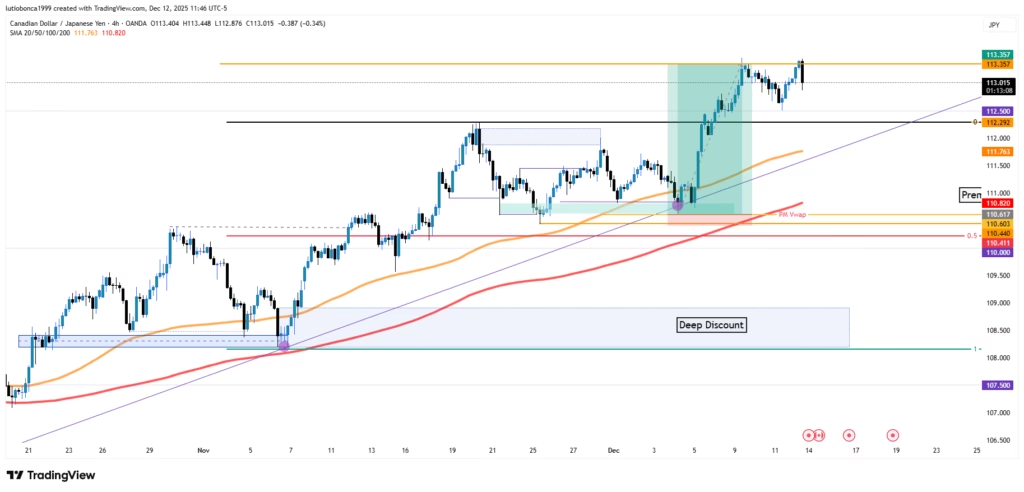
This chart perfectly illustrates the issue and the solution.
HTF Context
- Price is clearly above SMA 100 and SMA 200
- Both SMAs are aligned and sloping upward
- Market structure shows HHs and HLs
- Momentum is expanding
This immediately tells us:
Expect shallow pullbacks.
Do not expect deep discount.
What My Old Rules Would Say
- Price is in HTF premium
- Deep discount is far below
- Entry should be avoided
Result:
👉 Missed trade
What Actually Happened
Price:
- Pulled back into SMA 100
- Respected a bullish breaker
- Filled a small FVG
- Showed continuation structure
This created a high-probability continuation trade — exactly the move that followed.
Despite being “premium” structurally:
- It was discounted relative to trend
- Institutions defended price early
- The market never returned to deep discount
The Refined Framework I Now Use
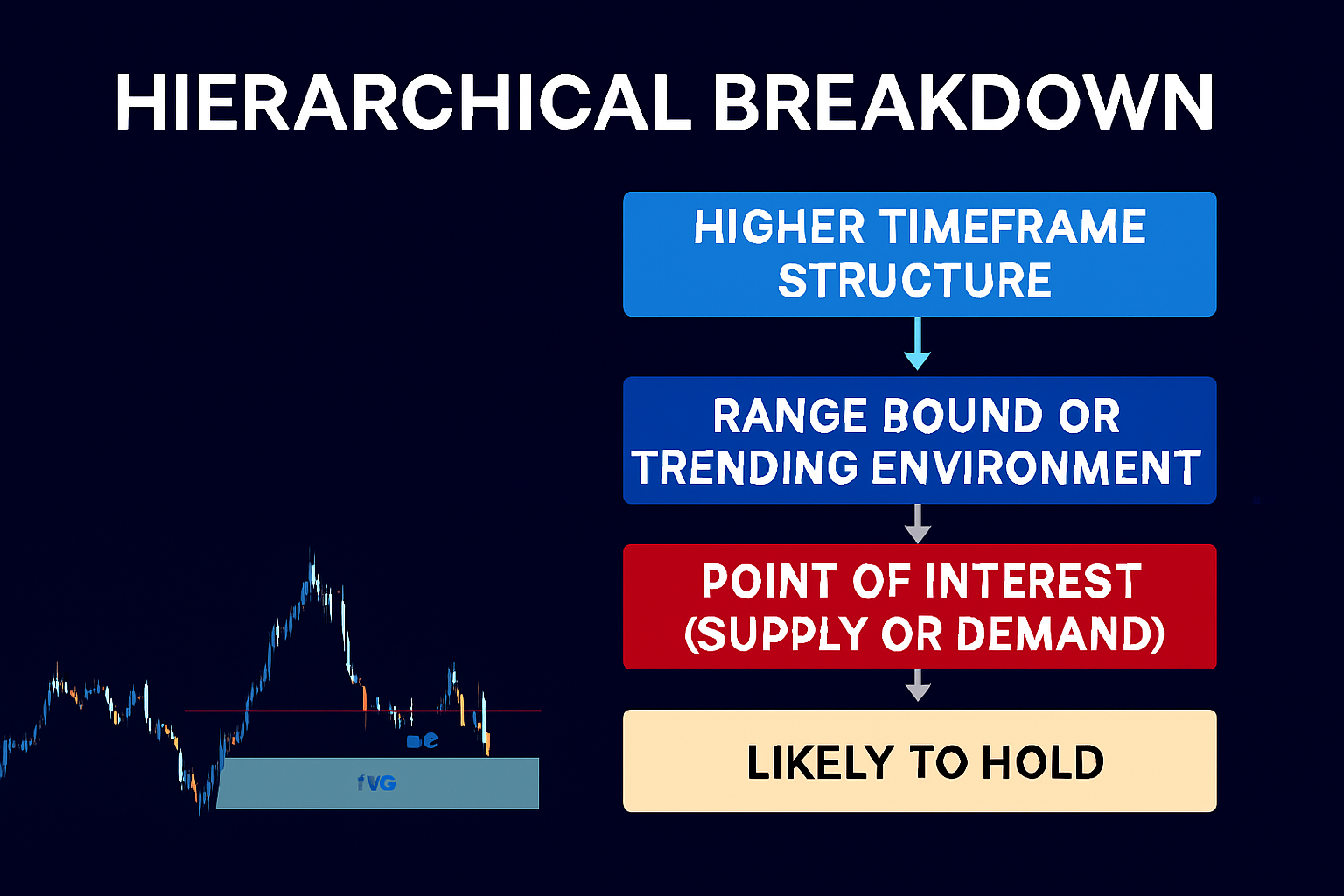
Step 1: Determine Trend Strength (HTF)
On 4H or Daily:
- Is price above SMA 100 & 200?
- Is SMA 100 above SMA 200?
- Are they sloping cleanly?
If yes → strong trend environment
Step 2: Apply the Correct Entry Logic
Strong Trend
- Accept shallow pullbacks
- Buy near SMA 100
- Use MSS/SMS + FVG + breakers
- Allow mid-range setups
- Ignore structural premium
Weak or Ranging Trend
- Enforce premium–discount strictly
- Avoid mid-range
- Require deep retracements
- Mean reversion logic applies
Step 3: Lower Timeframe Execution
On 1H or 15m:
- Look for continuation MSS
- Use SMAs as directional bias, not entry triggers
- Refine entries with your existing model
The Final Lesson
The market does not owe us deep discount.
Strong trends:
- Compress retracements
- Shift value dynamically
- Punish static thinking
By integrating SMA 100 & 200 into my existing structure-based model, I did not abandon discipline — I adapted it to market conditions.
Conclusion
This evolution allowed me to:
- Stop missing high-quality continuation trades
- Correctly interpret premium in strong trends
- Trade mid-range setups with confidence
- Maintain structure-based discipline without rigidity
Weak trend → static premium–discount
Strong trend → dynamic SMA-based discount
This framework is now a permanent part of my trading and mentorship process.
Read this for more details —>>WHY YOU’RE MISSING TRADES